About Be Well

Welcome to Be Well with Wels.

Be Well is an expression of who I am and is inspired by my individual journey. I am fortunate to have found my passion early in life and my personality has allowed me to pursue it. I am very much a counselor at heart and thrive helping others overcome life's hurdles. The formation of my coaching philosophy models my belief in the connection of the mind-body-spirit as an individualized yet integrated route to achieving inner balance and optimal wellbeing. Be Well is a fusion of my personal experience, information, tools, resources, and motivations that have inspired me. In turn, I hope to inspire and support you so that you may integrate my footprints into your own journey.

Friday, August 30, 2013

Week's Notable Words

The Notable Words, Quotes, and Sayings I came across/ heard this week!

"Our days are happier when we give people a bit of our heart rather than a piece of our mind"      Unknown Author

"God didn't add another day in your life because you need it. he gave it because someone out there needs you"      Author Unknown

"Too many of us undervalue what we are and overvalue what we 're not"  M. Forbes


Until next Time ~ Be Well

Tuesday, August 27, 2013

Productivity Through "EntreLeadership"


I’ve recently been “Paid Forward” a copy of Dave Ramsey’s EntreLeadership. (I highly recommend this book to anyone considering starting or revamping their business, as well as anyone in a leadership position. It is an incredibly helpful, directed, and action driven tool!) I was especially inspired by some of Dave’s recommendations related to planning your day to optimize productivity.  Dave Ramsey recommends “being in control of your time with a to-do list” (not a big surprise that I like this suggestion). He further goes on to tell us of a quote he heard some time ago that reads “spending 15 minutes every morning planning your day on paper, will add 20% to your day’s productivity”

Think about this for a minute… increase your productivity by 20%... What could that look like, what could that mean for your day, your work, your personal life, family demands? How refreshed would you feel on your evening commute if you felt you accomplished 20% more work? How much more focus would you have with your family without that 20% of what- would-have-been unaccomplished looming over your thoughts? Don’t we all love ideas requiring minimal work with maximum payoff? Typically I equate output to input but in this case I absolutely agree that a quick 15 minutes can dramatically change your output! Give it a try, try spending a few minutes in the morning jotting your day down on paper and see how your productivity can increase when you have directed focus.

(Since finishing the book I have also “Paid Forward” EntreLeadership)


Until Next Time ~ Be Well

Friday, August 23, 2013

Week's Notable Words

What moves you? Is it nature, pictures, colors, or maybe sounds? Words move me; They can motivate me, quiet my mind, help me refocus, and sometimes even stop me in my tracks. I'm often inspired by quotes and saying that for one reason or another resonate with me. Here are some notable ones I heard, read, or stumbled upon this week: (Please know none of these are my words and in most cases I am unsure who the author is)


Seneca

"Beginnings are usually scary, endings are usually sad, but its whats in the middle that counts"  Hope Floats


"Life's problems wouldn't be called hurdles if there wasn't a way to get over them"

"Sometimes it is better to be kind than right, we do not need an intelligent mind that speaks but a patient heart that listens"

"People learn how to treat you based on what you expect from them"


Have a great weekend!

Until Next Time ~ Be Well

Tuesday, August 20, 2013

Finding Verse Creating Yourself

"The self is not something one finds, it is something one creates."  ~Thomas Szasz

A recent conversation with someone I highly admire and respect referenced this point as they began explaining their personal journey towards finding oneself through unforeseen life changes. I was aligned with their many points of understanding yet there was one sticking point for me. While it may seem like a simple difference in terminology and interpretation, I nevertheless am struck by how frequently we view our identity as something we need to find.   Call me analytical or picky, but I can't help perceive this view as surrendering personal power to an external expectation of who we should be. While yes, I am a huge proponent of self-inquiry and reflection, I am more than eager to take an active part in creating myself instead of finding who the world thinks I should be. Again this may just be a slight difference in terminology, but such slight differences have the strength to disempower.

I am absolutely positive this was not the moral of the story I was hearing and most people wouldn’t give a second thought to this distinction, but for just a moment step back and personalize what this difference can mean in your life… Do you want to Find Yourself or Create Yourself? The undertone is strong with an impactful message allowing you to be in control of your next step, your next journey.  While stepping back, I’m reminded that self-discovery and creation is a life long journey and not a stop sign destination. No matter what stage of our life we are in or what lies in front of us; when dissected it all comes back to our personal values and what we are striving for -- an answer that is very unique and different for each person. 

I have no need to conform to the stereotypes others have defined for me.
- Jonathan Lockwood Huie 

"You cannot dream yourself into a character; you must hammer and forge yourself one."  ~James A. Froude
Until Next Time ~ Be Well

Monday, August 12, 2013

Unplugging with Sophia Breene

I came across the following article yesterday that struck me not only close to home but was worded so poignantly I wanted to share it with you. Why Everyone Should Unplug This Weekend (And the one after that) was written by Sophia Breene and was posted on August 9th 2013, she does an excellent job utilizing a variety of resources to sum up her position on "Unplugging" while providing some practical insight we all should adhere to. For ease, I've included Sophia's article and cited resources below or click here to be redirected to her site with original post. Enjoy and thanks to Sophia Breene for sharing.

Until Next Time ~ Be Well

WHY EVERYONE SHOULD UNPLUG THIS WEEKEND (AND THE ONE AFTER THAT)

I don’t know about you, but my smartphone sometimes seems like Grand Central Station at rush hour. Between texts, emails, regular old phone calls, and notifications from Facebook, Instagram, and Twitter, keeping up with all the inputs can feel like a full-time job. In fact, I can’t remember the last time I passed a full 48 hours without checking my phone at least once. You’d think just turning off the gizmo would solve this (admittedly first world) problem, but going without technology can feel like cutting off a limb for young adults who’ve been “plugged in” since middle school.
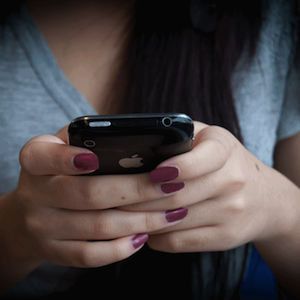
I’m not the only one who's noticed this — lately, I've read a ton of thought pieces by Internet bigwigs about the importance of taking deliberate breaks from all things web-related. Talking about taking a break from the Internet (gasp!) raises a few important questions: Has technology transformed from a convenience into a curse? And is disconnecting an important life strategy for making constant communication sustainable, or is it just the latest tech trend?iPhone PantsPhoto: Photo Giddy
OPEN 24/7: WHY IT’S NOT SO GREAT
Research suggests social media is the millenial generation’s drug of choice. While not technically considered an addiction, excessive attachment to the Internet is becoming more and more commonplace and problematic. A 2010 University of Maryland study found many young people describe their dependence on the Internet as an addiction, even if they’re not officially diagnosable. The 200 students were required to go on a 24-hour media fast and then write about their experience. Overall, the students complained that they felt bored, disconnected, uncomfortable, and anxious without their phones and computers.
These withdrawal symptoms suggest there must be some benefits to being “plugged in” all the time, right? For many people, the allure of being attached to an iPhone or Android is the ability to keep tabs on family, friends, and breaking news whenever, wherever. Compared to reading a newspaper or calling a friend for a long chat on the phone, social mediaencourages brief, unfocused, multitasking-friendly “check ins” rather than long periods of absorption. For better or worse, smartphones make it easy to check various sites and social media profiles with the tap of a fingertip, all while keeping the rest of our brains and bodies engaged in other tasks (though sometimes with dangerous consequences).
Go-Go-Gadgets
But in some cases the downsides to keeping phones and computers switched on 24/7 could outweigh the benefits. Multitasking — perhaps this generation’s Great White Whale — almost never boosts productivityIn fact, it’s usually just a form of procrastination that distracts us from what’s important and inhibits the formation of short-term memories [1][2].
Social (Media) Butterfly
TextingObsessive social networking isn’t doing us any favors, either. Constantly checking social media sites, work emails, and texts from far-flung friendssounds like it’s fostering connectivity, but the opposite is often true. Studies show spending tons of time online can actively harm relationships, interpersonal communication skills, and mental health [3] [4][5]recent study also shows that (perhaps unsurprisingly) following ex-lovers on social media can make it difficult for partners to move on after a breakup.
All of this might be due to the fact that social media is the Green Eyed Monster’s preferred stomping ground. Checking in on friends’ frequent vacations, late-night taco truck runs, and sunshiny days at the beach can create a constant state of Fear of Missing Out (FOMO) and anxiety.People obsessively refresh Facebook feeds and track Twitter followers because they’re afraid to be "on the outside" of news, events, and social gatherings. But at the end of the day, browsing photos from other people’s fun times is not the same as attending those parties and picnics and actually hanging out with friends in the flesh.
Open Office Hours
Constant connectivity hasn’t just changed how we socialize, but also how we bring home the bacon. Smart phones have created a whole new interpretation of the traditional “workaholic” trope. Instead of the classic image of a busy professional ensconced in their office at 2am, we now see young worker bees emailing while brunching and checking expense reports at the grocery store. As more and more business happens onlineversus in a cubicle or a meeting room, it’s entirely feasible to never stop working (minus a few hours of sleep). But is that a good thing?
The general agreement (thank goodness) is “no.” Studies show that in spite of modern work trends, we actually need weekends and nights off todisconnect and recuperate from the stresses of work [6]. Constantlychecking email, in particular, prevents people from distancing themselvesfrom the work environment — which can make it impossible to keep stressin check.
Rage Against the Machines
In the past, people could “switch off” after work by simply going home or avoid dealing with dramatic friends by not picking up the phone. But smartphones, social media, and the expectation that everyone should be available all of the time have made taking a breather much more difficult. From this necessity a new (anti-) tech trend has arisen: Over the past few years, the concept of “unplugging”, or ditching technology for a given period of time, has become popular amongst bloggers, tech wizards, and thought leaders around the web.Magnolia Tree

PRESS RESET: HOW UNPLUGGING HELPS
If multitasking and constant email cause a lack of productivity, negatively impact social relationships, and increase overall stress, can simply abstaining from using technology reverse these negative consequences? The simple answer, according to most research, is “yes.”
Scheduling regular “rest time” in the form of unplugging makes sense — like a muscle, the brain needs recovery time in order to develop and grow (and in this case, retain new memories). In fact, shutting off completely may be crucial: One University of Michigan study found that participants who walked in the woods after learning something new were more likely to retain it, suggesting that a little quiet time is essential to optimizing brain function [7]. Even brief activities such as taking a short walk (sans phone, of course), spending time in nature, or daydreaming canhelp the brain reboot. But without free time (i.e. totally unstructured and without Facebook, idle web surfing, or TV), it’s impossible to fully learn new skills and keep the brain at its cognitive best.     
Luckily, more and more people are validating the importance of down time. Over the past few years, the idea of disconnecting from all online communication (and the stress that comes with it) has grown into a verifiable movement. In 2010, a group of Jewish artists created theSabbath Manifesto, a movement designed to help people of all faiths and creeds find a day of rest amid the hullabaloo of modern technology. The Sabbath Manifesto also created a new holiday dedicated to taking time to smell the roses: The National Day of Unplugging happens once a year (It will be celebrated next on March 7-8, 2014).
Over the past few years, countless bloggers and thought leaders have embarked on their very own technological “fasts” and written about the trials and tribulations of doing so. For example, the bloggers behind lifestyle website The Minimalists suggest cancelling home Internet accessto make using a computer in the house less appealing. Some Internet celebs-at-large, like writer Baratunde Thurston, advocate a more stringent approach: Thurston went cold turkey with a 25-day “digital detox” after noticing that his social media addiction was getting out of hand. Even more extreme, The Verge writer Paul Miller spent an entire year sans Internet. After their tech-free hiatuses, both Thurston and Miller are back online. It seems that both writers used their Internet sabbaticals to take a breather rather than establish a new lifestyle.  
For those who can’t resist the Internet’s siren song, special getaway experiences offer real-life activities and bonding experiences that distract former tech fiends from the withdrawal process. One popular example isCamp Grounded in California, which guides tech-weary adults through agadget-free weekend filled with vegan meals, field games, arts and crafts, yoga, and stargazing. The travel industry is also in on the trend; these days, people can sign up for fancy digital detox vacations in a number of luxurious settings.
Regardless of length or intensity ("Does texting count? What about checking email?"), these digital detoxes or technology fasts prove an important point: It is feasible to take a step back from our always-on lifestyles. With a little bit of effort, it’s entirely possible to stop living through our phones and computer screensre-connect with other human beings, reduce stress, and enhance creativity.

OFF THE GRID — THE TAKEAWAY

Currently, “unplugging” is a trendy buzzword, but hopefully taking regular technological breaks isn’t just a passing fad. The Internet and mobile communication have grown by impressive leaps and bounds in the past ten years, largely to our society’s benefit. But because we’re used to tech companies rolling out a new (and better!) product or software every week,we’ve been operating under the idea that “more is more” — more communication is good, more social media sites are better, and, above all, the ability to contact anyone at anytime is best of all.
But in reality, this behavior might be unsustainable. Keeping up with email, Facebook, Twitter, Instagram, and other sites 24/7 can be exhausting, bad for our brains, bad for our relationships, and bad for our productivity. Instead of fading out like many transient trends, perhaps it would be better if the concept of “unplugging” catches on even more and helps us tech junkies develop new protocols for how to communicate and connect (without going crazy) in the Internet Age.


SOPHIA BREENE

Works Cited-

  1. Who multi-tasks and why? Multi-tasking ability, perceived multi-tasking ability, impulsivity, and sensation seeking. Sanbonmatsu DM, Strayer DL, Medeiros-Ward N, Watson JM. Department of Psychology, University of Utah, Salt Lake City, UT, USA. PLoS One. 2013;8(1):e54402.
  2. Deficit in switching between functional brain networks underlies the impact of multitasking on working memory in older adults. Clapp WC, Rubens MT, Sabharwal J, Gazzaley A. Department of Neurology, The W M Keck Foundation for Integrative Neuroscience, University of California, San Francisco, CA, USA. Proceedings of the National Academy of Sciences of the United States of America. 2011 Apr;108(17):7212-7.
  3. Online social networking and addiction — a review of the psychological literature. Kuss DJ, Griffiths MD. International Gaming Research Unit, Psychology Division, Nottingham Trent University, UK. The International Journal of Environmental Research and Public Health. 2011 Sept; 8(9):3528-3552.
  4. The effect of psychiatric symptoms on the internet addiction disorders in Isfahan’s University students. Alavi SS, Maracy MR, Jannatifard F, Eslami M. Behavioral Sciences Research Center and Deparrmtne of Epidemiology and Biostatistics, Isfahan University of Medical Science, Isfahan, Iran. Journal of Research in Medical Sciences. 2011 Jun; 16(6):793-800.
  5. Media multitasking is associated with symptoms of depression and social anxiety. Becker MW, Alzahabi R, Hopwood CJ. Department of Psychology, Michigan State University, East Lansing, MI, USA. Cyberpsychology, Behavior and Social Networking. 2013 Feb; 16(2):132-5.
  6. Relationships between work-home segmentation and psychological detachment from work: the role of communication technology use at home. Park Y, Fritz C, Jex SM. Department of Psychology, Bowling Green State University, Bowling Green, OH, USA. The Journal of Occupational Health Psychology. 2011 Oct; 16(4):457-67.
  7. The cognitive benefits of interacting with nature. Berman MG, Jonides J, Kaplan S. Department of Psychology, University of Michigan, Ann Arbor, MI, USA. Psychological Science. 2008 Dec; 19(12):1207-12.

Tuesday, August 6, 2013

Managing Your Tomorrows

Do you find yourself stressed or burdened by simply thinking of your day tomorrow? What do you do to mentally prepare yourself for the upcoming day or week; one that is inevitable filled with work, errands, tasks, to-do list, market trips, book clubs, dinner dates, rec. leagues, and anything else we fill our calendar with? When I was in graduate school, I discovered (over many weeks and much frustration) that Sunday nights were my most awful night of sleep during the whole week. I typically approach my Sunday nights with the goal of getting a good night sleep, starting the week off right and being prepared as much as possible to start the week successfully – however it was more commonplace for me to lie awake going over what the day or week will bring. The more I watched the clock and let my mind wonder, the worse the sleep got! I know you have been there, we all have!


Luckily, I found that I could use my personality traits as a strength in overcoming this Sunday night dread. For those who know me, you know I am very much the list and planning person; so in order to keep my thoughts at bay, I make lists of what needs to be done when. I don't just stop there though; I find it extremely helpful to spend about an hour on Sunday nights mentally prepping

and planning through my week. For me that preparation entails, getting my work clothes together, figuring out meals, making sure I have dog walkers or doggy day care scheduled, maybe even preparing a few meals on Sunday's, and finally looking at my calendar to make sure I am prepared for what I need to be attending to. I also make a master list of miscellaneous things I need to get done by next weekend. I can later make my daily list from this master list. This type of list may or may not work you, but give it a shot, play around with different types of planning tools and see what works for you.

With that in mind, what can you do next Sunday to prepare for your week to make things easier for yourself?


Until Next Time ~ Be Well